Solar Saltworks
|
In 1550 Spain was at war with Holland and cut them off from their salt supplies in Portugal. In a desperate search for a new manufacturing ground the Dutch navy was sent to the Caribbean. They came to Punta de Araya, a small, dry piece of land on the Venezuelan coast not far from Bonaire. Unfortunately this area couldn't satisfy the European demand on salt, so the search continued until in 1623 a Dutch frigate "found" the tiny island of Bonaire. Somehow the Dutch managed to take over control of the island without starting another argument with the Spanish. 13 years later the Dutch had established a colony and converted the southern part of the island into salt pans. Today the pans cover about 10 percent of the island and Cargill Salt exports about 440.000 tons a year. Most of the salt is used for water-softening and melting ice on North American roads. A small portion is used for the production of table salt. |
|
|
|
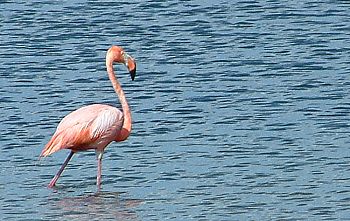
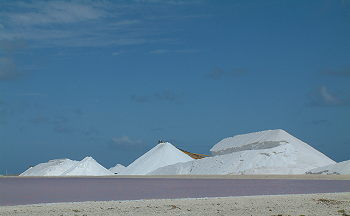
55 ha (about 135 acres) of wetlands and salt ponds are reserved for Flamingos which nest and raise their young. The relationship between salt ponds and Flamingos is quite simple. As the salt concentration in the ponds rises, pink salt-loving bacterias start to bloom, turning the ponds into a weird pink color and attracting tiny pink shrimp. Flamingos love those shrimp and feed them all day and because of that diet get their pink colouring. |
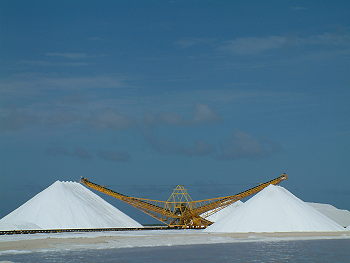
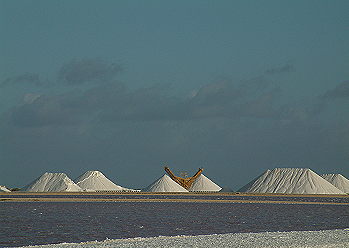
| Producing salt is an easy process. All you need is seawater, sun and wind. And believe me, Bonaire has got a lot of that. Seawater with it's natural salt concentration of 4 % is pumped into large pond where it evaporates. When the salt concentration reaches 26 % it is transferred to shallow pans to evaporate completely. The salt crystals then are collected, washed, graded and piled in huge mounds to dry. You can see them as soon as you leave Kralendijk to the south. Conveyor belts transport it to ships docked to the salt pier. |
|
WHITE SLAVE
|
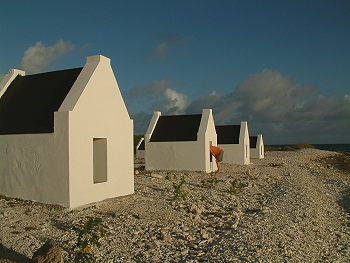
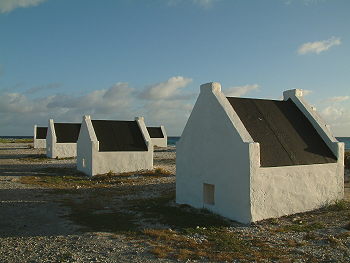
The tiny slave huts stand as reminders of the cruel condtions salt pan laborers had to endure. These huts (built in 1850) were home for workers who had to "harvest" the salt in the pans. As many as four men used to live in a dark and almost windowless structure, only 3 m (10 feet) wide and barely 1,5 m (5 feet) high. |