|
Brandaris, the highest peak of Bonaire (241 m / 784 ft.) framed by huge candelabrum-cactuses.
|
|
|||
|
|
Washington-Slagbaai-Nationalpark
|
Brandaris, the highest peak of Bonaire (241 m / 784 ft.) framed by huge candelabrum-cactuses.
|
|
|||
|
|
| In 1867 parts of northwestern
Bonaire were sold by the Government of the Colony of Curacao to private
investors. In 1920 it was finally owned by the Herrera Brothers who
named their newly acquired land "America". One of the houses
they built served as the center of the plantations business and
consequently was named "Washington". The plantations produced
large amounts of goat, salt, aloe-extract, charcoal and dive-dive-pods (used
for tanning leather). The products were exported to Curacao and Europe.
In 1967 the owner Julio Herrera became ill and feared his heirs would
sell this natural beauty to land-developers. He negotiated a deal with
the government to hand it over after his death to keep his property in
its natural shape and for the enjoyment of the people. On May 9th, 1969
it became the first nature sanctuary of the Netherland Antilles.
|
| When you take the long route through
the park the coast is to your right all the time. (map)
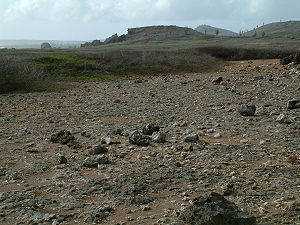
Starting at the east coast you'll drive through a volcanic rock area
which looks as barren as the moon. At some places you can find fossil
shells and corals embedded in limestone which encircles the volcanic
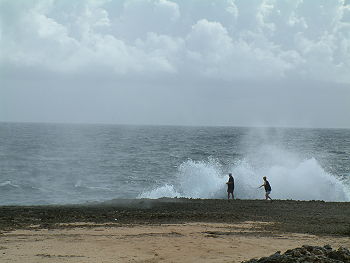
center of Bonaire. At Suplado a blow hole makes a deafening sound when
the strong surf breakes. And if you focus on the blow hole to much and
forget about watching your back a big wave might give you a free and
refreshening shower!! :-))
I got one, too! This couple arrived after I had mine and we waited with malicious joy what might happen to them! |
 |
|
|
|
|
|
The northern most point of Bonaire with an abandonend light house. Must have been a boring job at this god- forsaken place. |
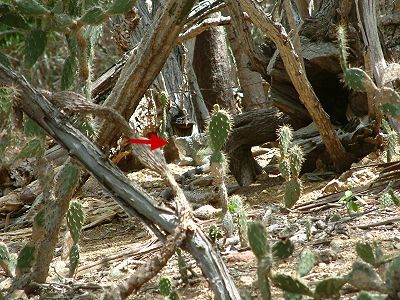
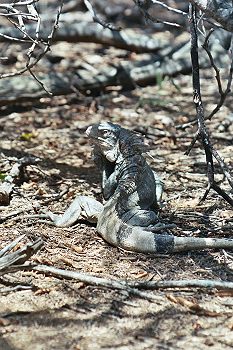
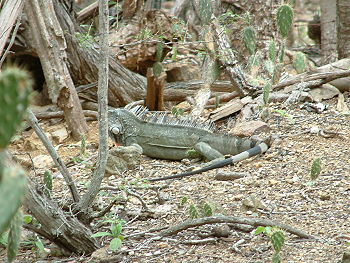
| A lot of people come to the park to see Iguanas, the huge green lizards. We too! But unfortunately we or the Iguanas had a bad day. The only one we saw fled immediately and watched us from a safer distance through the dense scrup. His green-black-white skin is an excellent camouflage. Can you find him on the left photo? If not click on it! |
|
|
 |
|
|
|
|
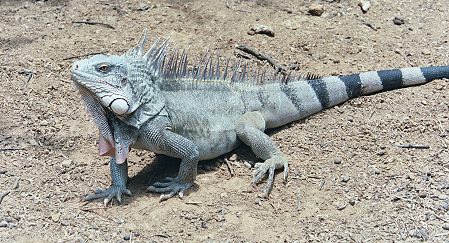
A few days after our visit Bettina
and Juri from Zurich/ Switzerland had more luck and could take some closer photos of the
Iguanas
(thanks for giving us some copies). Tourists
often feed them and they don't get hunted in the park, so they lost their natural caution and
come very close
looking for food.
|

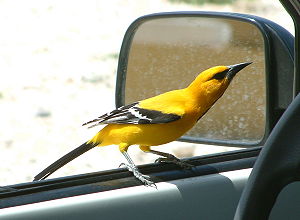
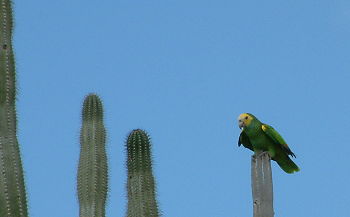
| Besides the "non-existent" Iguanas and curious lizards there are some beautiful birds to look out for. The lorikeet (right photo) is very shy and rarely seen. The yellow bird (name?) on the left photo was also shy but tried to find out who's behind that mirror. |
|
|
 |
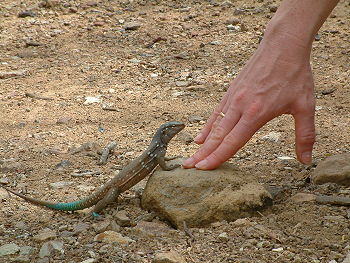
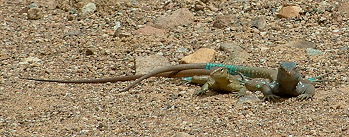
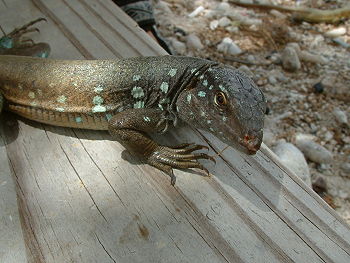
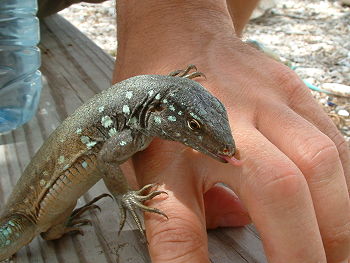
curious lizard approaching!
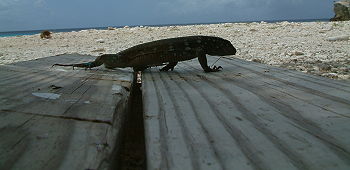
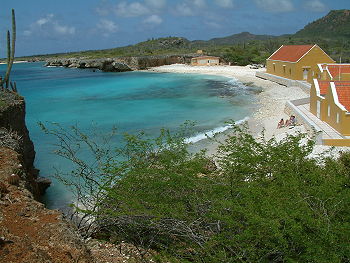
The houses of the former Slagbaai plantation which now belongs to the national park too